
[CAS NO. 866028-26-4] INF39
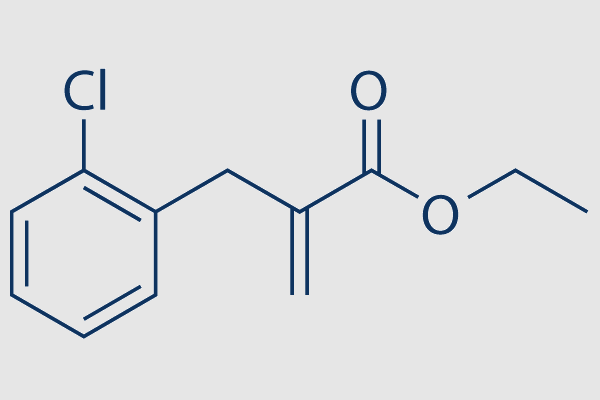
Please click "REQUEST A QUOTE" button if you need other sizes or custom synthesis
request a quote
If there is no stock, or you need other sizes or custom synthesis, please:
PRODUCTS SPECIFICATIONS [866028-26-4]
Store

Catalog
SLK-S8559
Brand
Selleck
CAS
866028-26-4
DESCRIPTION [866028-26-4]
Overview
| MDL | MFCD27930542 |
|---|---|
| Molecular Weight | 224.68 |
| Molecular Formula | C12H13ClO2 |
| SMILES | O=C(OCC)C(CC1=CC=CC=C1Cl)=C |
For research use only.
Storage
2 years -80 in solvent
Room temperature shipping(Stability testing shows this product can be shipped without any cooling measures.)
Room temperature shipping(Stability testing shows this product can be shipped without any cooling measures.)
Shipping
Room temperature shipping(Stability testing shows this product can be shipped without any cooling measures.)
Description
INF39 is a nontoxic, irreversible inhibitor that counteracts NLRP3 activation through direct irreversible interaction with NLRP3 and partial inhibition of LPS-driven pro-inflammatory gene expression.
Targets
| NLRP3 [1] |
In vitro
INF39 inhibits NLRP3 ATPase in a concentration-dependent manner and prevents pyroptosis of THP-1 cells. It is able to efficiently inhibit NLRP3-dependent IL-1β release and reduce caspase-1 activation and pyroptosis (measured as extracellular LDH) in macrophages (BMDMs).
In vivo
Oral Administration of INF39 reduces systemic and colonic inflammation in rats treated with 2,4-Dinitrobenzenesulfonic acid. Rats treated with INF39 display a significant reduction of macroscopic damage score. Oral administration of INF39 reduces colonic myeloperoxidase, IL-1β, and TNF Levels in DNBS-treated rats. INF39 can exert beneficial effects on colitis, by reducing MPO, IL-1β, and TNF pro inflammatory cytokine levels in colonic tissues from inflamed rats, thus suggesting that the blockade of NLPR3 activation could represent a suitable pharmacological target for the management of intestinal inflammation. INF39, following oral administration, is stable and is absorbed into the intestinal epithelium, where it can act locally and generate the nontoxic metabolites.

Powered by Arctom Copyright © 2026 Arctom. All rights
reserved.