
ATTRIBUTES
Store

Catalog
CD-SL-000199
Brand
ChemDiv
OVERVIEW
ChemDiv 3D-Biodiversity Library contains 34,000 compounds.
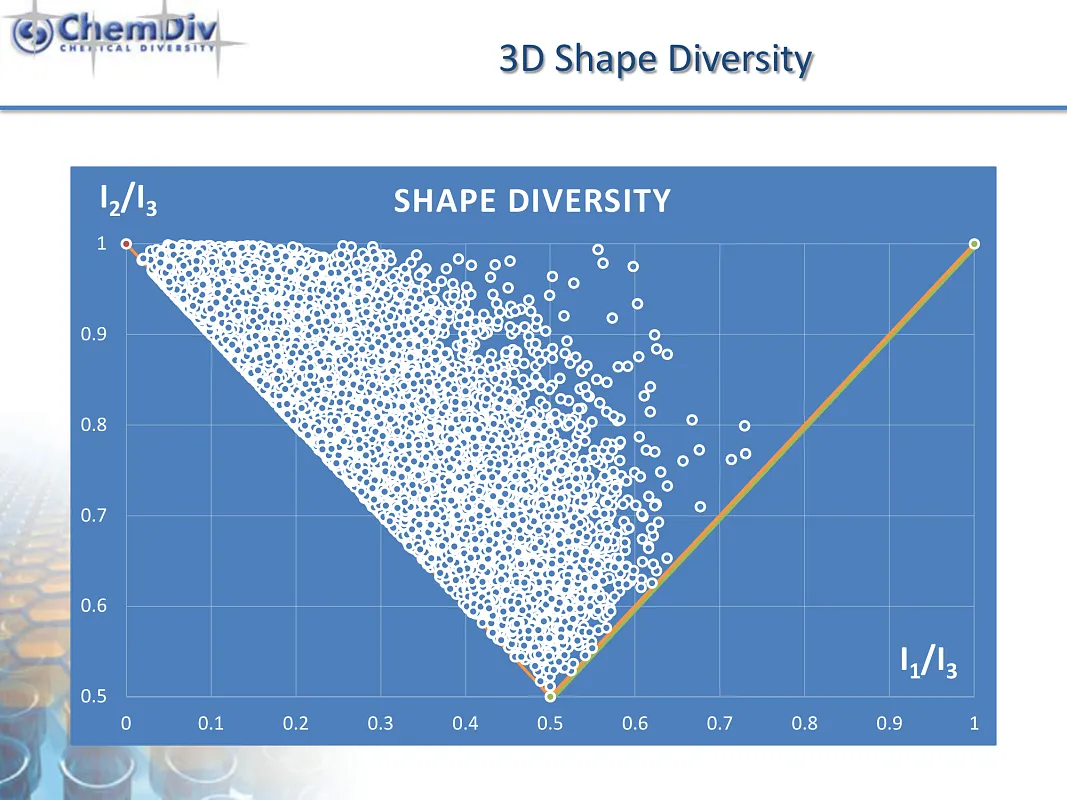
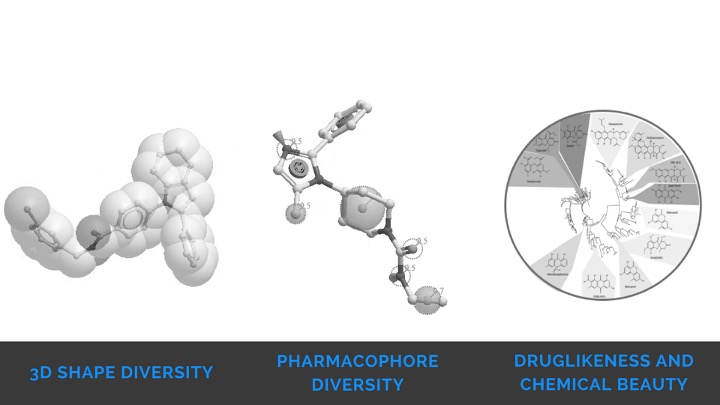
Structural diversity is highly required because the molecular shape is among the most important factors mediating biological effects of molecules. Also, increased 3D shape can lead to greater aqueous solubility due to greater solvation and poorer solid-state crystal lattice packing, as well as improved ADMET properties. As a result, increasing the 3D shape of molecules has been correlated to broader biological activity. It has been shown that molecular shape is more strongly dictated by the core compound scaffold rather than the shape or positioning of substituents decorating the core scaffold. Thus, libraries consisting of a variety of 3D scaffolds are expected to display a wider range of biological activities compared to single scaffold libraries. [1]
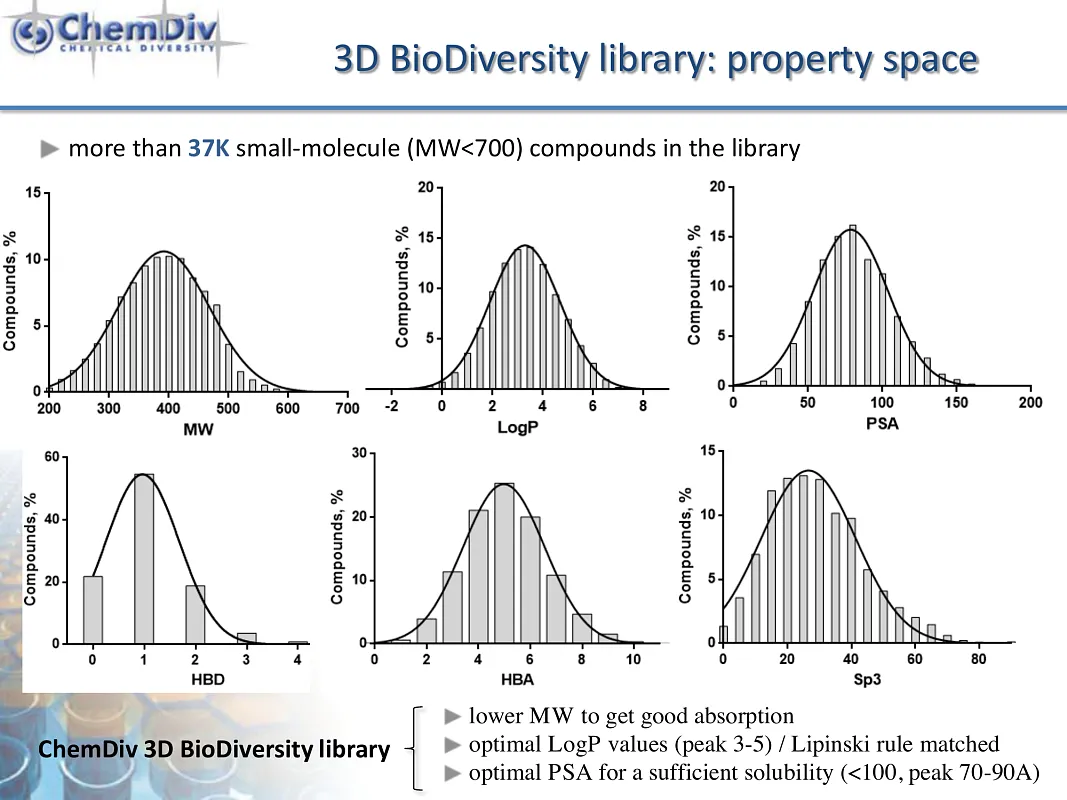
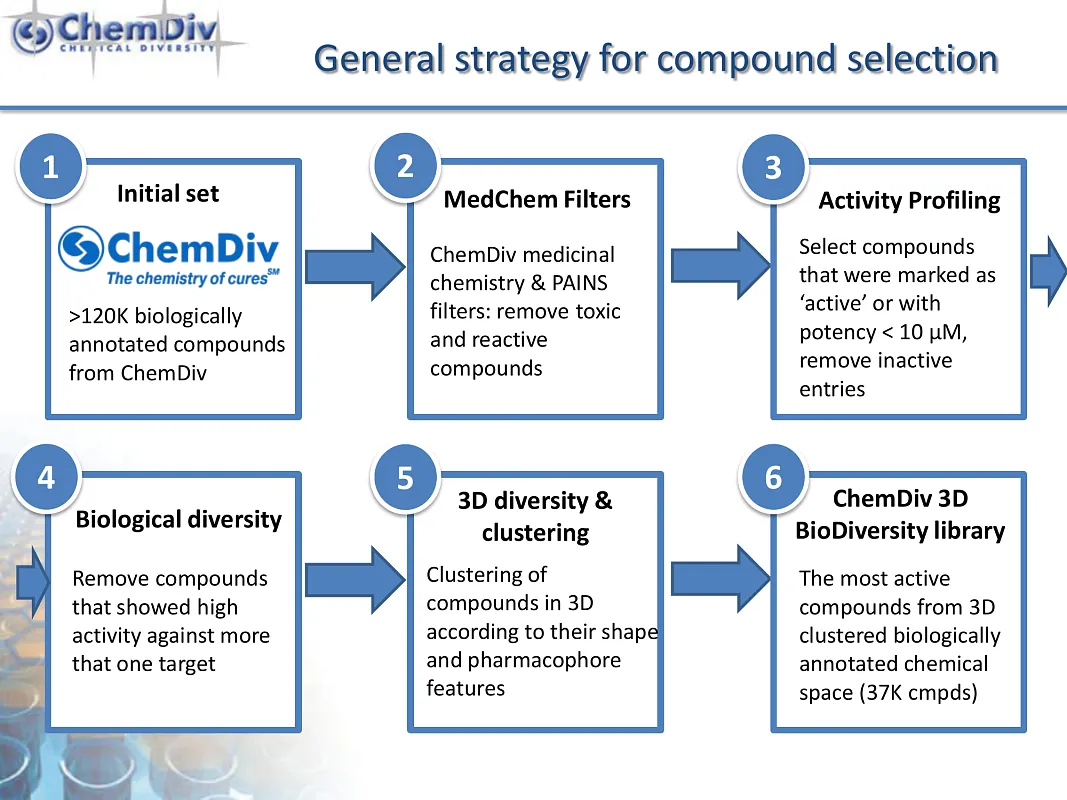
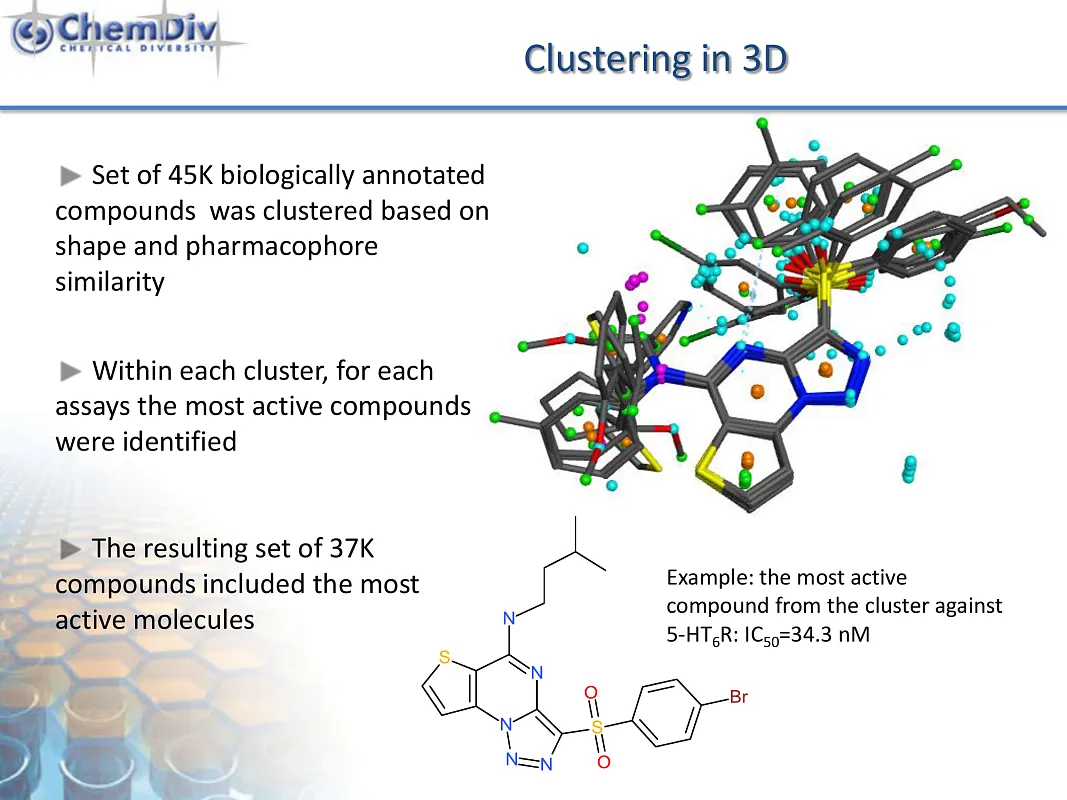
The library presents the most active compounds from 3D clustered biologically annotated chemical space. The clustering of compounds in 3D was carried out due to their shape and pharmacophore features. For each assay the most active compounds for various targets were identified. Potential targets include enzymes, membrane receptors, transcription factors, epigenetic regulators, Ion channels, transporters and other proteins. The library consists of protein inhibitors/activators and receptor agonists/antagonists. The set of bioactive compounds is characterized by lower MW for better absorption, optimal LogP values and optimal PSA for solubility.
[1] C. N. Morrison, K. E. Prosser, R. W. Stokes, A. Cordes, N. Metzler-Nolte, and S. M. Cohen, “Expanding medicinal chemistry into 3D space: Metallofragments as 3D scaffolds for fragment-based drug discovery,” Chem. Sci., vol. 11, no. 5, pp. 1216–1225, Feb. 2020, doi: 10.1039/c9sc05586j.

Powered by Arctom Copyright © 2026 Arctom. All rights
reserved.